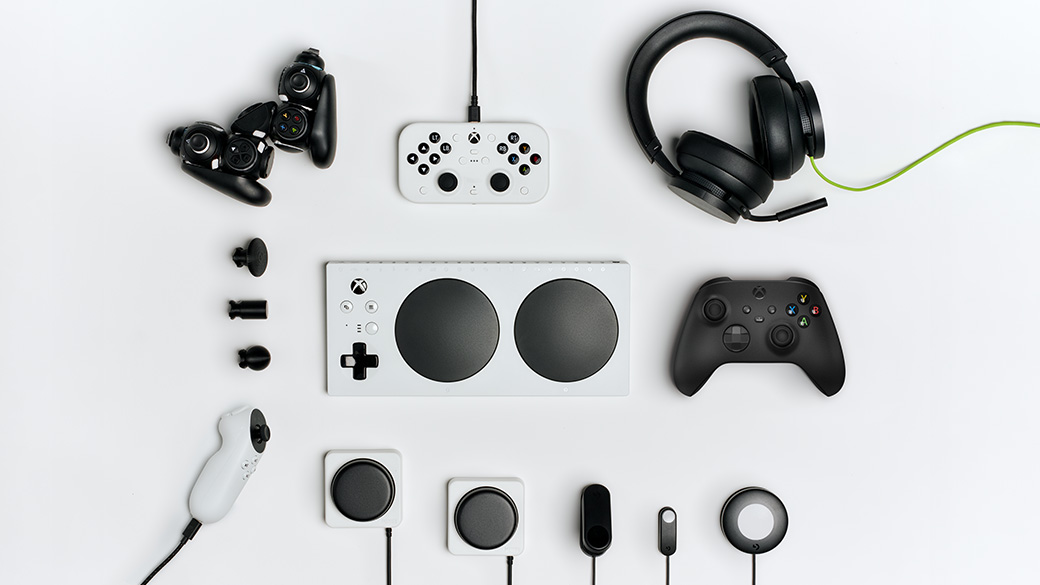
From Joysticks to Motion Sensors: How Gaming Controllers Have Transformed
The evolution of gaming controllers has been nothing short of remarkable, transitioning from simple joysticks to sophisticated motion sensors that redefine how players interact with games. Initially, gaming controllers consisted of basic buttons and a single joystick, allowing for simple navigation in 2D environments. However, as technology progressed, manufacturers began to innovate, introducing dual analog sticks and triggers that enhanced gameplay complexity. This shift laid the groundwork for more immersive experiences, enabling intricate game mechanics that required enhanced player control.
In recent years, the introduction of motion sensors has truly transformed the gaming landscape. Devices like the Nintendo Wii Remote and PlayStation Move have demonstrated how physical movement can directly translate into in-game actions, creating a more engaging and active gaming experience. This paradigm shift has not only expanded the types of games available but has also attracted a wider audience, including those who may not have traditionally engaged with video games. As technology continues to advance, it will be fascinating to see how future controllers evolve and what new forms of interaction will emerge.
Counter-Strike is a highly popular tactical first-person shooter game that pits teams of terrorists against counter-terrorists in various game modes. Players can use a variety of weapons and tactics to outsmart their opponents, making strategy a key aspect of the gameplay. For those looking to enhance their gaming experience, check out the Top 10 iphone gaming accessories that can elevate your mobile gaming sessions.
The Evolution of Gaming Controllers: A Decade-by-Decade Breakdown
The journey of gaming controllers has been marked by innovation and transformation, reflecting the evolution of technology and player preferences over the years. In the 1970s, gaming began with simple joystick and button designs, exemplified by the Magnavox Odyssey, which featured paddles for basic gameplay. As we moved into the 1980s, consoles like the Atari 2600 introduced more ergonomic designs with the iconic joystick and button combination, laying the groundwork for future controllers. By the 1990s, the emergence of 3D gaming pushed developers to create controllers like the PlayStation's DualShock, which introduced vibration feedback and analog sticks, significantly enhancing the gameplay experience.
As we entered the 2000s, gaming controllers continued to evolve with the introduction of wireless technology, allowing for greater freedom of movement. The release of the Xbox 360 controller set a new standard for ergonomics and functionality, featuring a layout that is still influential today. The 2010s saw further advancements with the integration of motion controls and touch interfaces, as seen in the Nintendo Wii and PlayStation 4's touchpad, respectively. Now, we find ourselves in the current decade, where gaming controllers are enhanced with adaptive triggers and customizable options, blurring the lines between casual and competitive gaming while continuing to push the boundaries of player interaction.
What Makes a Great Gaming Controller? Exploring Design and Functionality Through the Ages
The evolution of gaming controllers has significantly influenced the gaming experience, showcasing how design and functionality have adapted over the years. From the simplistic joystick of the early arcade games to the complex, feature-rich controllers of today, each iteration has brought us new ways to interact with our favorite games. Key elements of a great gaming controller include ergonomic design, responsive buttons, and innovative features such as haptic feedback and customizable settings. These components work together to create an immersive experience that enhances gameplay.
Throughout the decades, notable advancements have set benchmarks for what players can expect from a gaming controller. For instance, the introduction of wireless technology paved the way for unrestricted movement, allowing players to engage in more dynamic gameplay. Additionally, features like motion sensors, built-in microphones, and even touchpads have transformed the way users interact with consoles. In summary, a great gaming controller not only offers superior design but also integrates cutting-edge technology, ensuring that it caters to the evolving needs of gamers across all generations.